The Success Secret the World's Top Performers Don't Talk About Enough

Updated: 2 days ago
What separates the most successful people in the world from those who work equally hard but achieve less?
It is not the number of hours. Research — and clinical experience — consistently shows that beyond a certain threshold, more hours produce diminishing returns. Exhaustion narrows thinking. Stress constricts creativity. The brain under chronic pressure defaults to reactive, repetitive patterns rather than the kind of bold, original thinking that actually moves things forward.
The edge that the world's most effective people have found is not a productivity system, a morning routine, or a tighter calendar. It is a fundamentally different neurological state — one they access deliberately, twice a day, in twenty minutes.
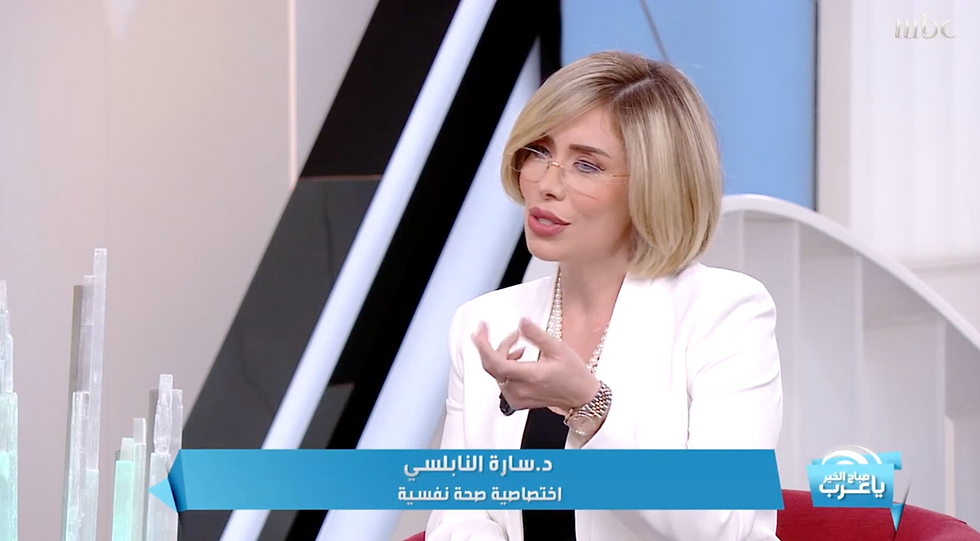
In a February 2020 interview on MBC1's Sabah Al Khair Ya Arab, I was asked about workaholism and what genuine success requires. My answer surprised some viewers: we are no longer in an era of work hard to succeed. We are in an era of work intelligently to succeed. And working intelligently begins with the nervous system.
Your Nervous System Is Your Most Important Professional Asset
We tend to think of productivity as a matter of time, discipline, and effort. But cognitive function does not exist independently of the body. The quality of your thinking — your ability to solve problems creatively, see connections others miss, make decisions with clarity — is a direct expression of your nervous system's current state.
A fatigued, cortisol-saturated nervous system produces narrow, reactive, convergent thinking. It is the cognitive equivalent of tunnel vision. You can push through it — most people do — but the output is rarely your best.
A rested, coherent nervous system produces something qualitatively different: expansive, integrative, creative thought. The kind of thinking that generates novel solutions. The kind that leads to the breakthroughs that actually change trajectories.
This is not a metaphor. It is neuroscience. And it is why the most effective investment a high-performing person can make is not in their schedule — it is in their nervous system.
What Transcendental Meditation Does That Other Practices Don't
Transcendental Meditation occupies a scientifically distinct category from other meditation techniques. Unlike mindfulness apps, visualisation practices, or concentration-based methods, TM produces a specific and measurable physiological state during practice: restful alertness.
During TM, metabolic rate drops to a level twice as deep as deep sleep — while the practitioner remains fully awake and aware (Wallace, 1970). The body accesses a depth of rest in twenty minutes that it cannot reach through sleep alone. This is not a claim. It is one of the most replicated findings in mind-body research, documented across hundreds of peer-reviewed studies conducted at more than 200 universities and research institutions worldwide.
The brain signature during TM is equally distinctive: high-amplitude Alpha coherence — synchronised, integrated brainwave activity across regions associated with clarity, creativity, and holistic thinking (Travis et al., 2010). This is the neural correlate of what high performers describe as being "in the zone" — not forced, not strained, but effortlessly sharp.
After each twenty-minute session, the nervous system has recharged at a depth that hours of additional work cannot provide. It is, as I describe it to my clients, a complete reboot.
The People Who Already Know This
Ray Dalio — founder of Bridgewater Associates, one of the world's largest hedge funds — has spoken extensively about Transcendental Meditation as the single most important factor in his success. He began practising in 1969 and has called it "the most important thing I've ever done." He has said it has given him equanimity and creativity, and that it "opened up the aperture of my mind."
Dalio is not alone. Heads of state, prime ministers, military leaders, artists, and executives across industries have adopted TM — not as a wellness trend, but as a professional strategy. The pattern is consistent: within months of beginning regular practice, their orientation shifts. The compulsive drive to push harder gives way to something more powerful — a stable inner state from which clear decisions, creative thinking, and decisive action emerge naturally.
They stop working from depletion. They start working from depth.
What Happens in Practice
The shift is not dramatic or sudden. It is cumulative and structural.
In my clinical work with clients who incorporate TM, what I observe over weeks and months is a gradual reprioritisation. Maintaining inner calm and wellbeing becomes less of a luxury and more of a non-negotiable — not because they have become less ambitious, but because they have understood something essential: they are the source of their productivity. Their nervous system is the instrument. Everything else — the strategy, the team, the execution — depends on the quality of that instrument.
This understanding changes how they work. They protect their practice time the way a surgeon protects their hands. They sleep with more intention. They take breaks not as signs of weakness but as part of the performance architecture. And paradoxically, they achieve more — because they are working from a state of integration rather than exhaustion.
The Practical Invitation
If you are a high-performing professional, an executive, an entrepreneur, or anyone who relies on the quality of your thinking to do what you do — Transcendental Meditation is worth your serious attention.
Not because it will slow you down. Because it will change the level from which you operate.
Twenty minutes, twice a day. That is the entire investment. In exchange, the research documents reductions in cortisol, improvements in cardiovascular health, reduced burnout, increased creative problem-solving, and measurably better decision-making under pressure (Nidich et al., 2009).
The world's best performers have already made this calculation. The question is whether you will.
If you are based in Dubai or the GCC and want to learn more, you can explore TM here or get in touch directly.
References
Nidich, S., Rainforth, M.V., Haaga, D.A.F., Hagelin, J., Salerno, J.W., Travis, F., Tanner, M., Gaylord-King, C., Grosswald, S., & Schneider, R.H. (2009). A randomized controlled trial on effects of the Transcendental Meditation program on blood pressure, psychological distress, and coping in young adults. American Journal of Hypertension, 22(12), 1326–1331.
Travis, F., Haaga, D.A.F., Hagelin, J., Tanner, M., Arenander, A., Nidich, S., Gaylord-King, C., Grosswald, S., Rainforth, M., & Schneider, R.H. (2010). A self-referential default brain state: Patterns of coherence, power, and eLORETA sources during eyes-closed rest and Transcendental Meditation practice. Cognitive Processing, 11(1), 21–30.
Wallace, R.K. (1970). Physiological effects of Transcendental Meditation. Science, 167(3926), 1751–1754.
About the Author
Ms. Sarah El Nabulsi, M.Sc., M.A., M.A. is a DHA Licensed Clinical Psychologist in Dubai, UAE Director of the Transcendental Meditation Organization, and certified TM and TM Advanced Techniques instructor. She has helped executives, professionals, and high-achieving individuals across the UAE achieve sustainable high performance through evidence-based integrative approaches. She has been featured on MBC1, BBC Arabic, Sky News Arabia, Al Hadath, and Kalam Nawa3em.
Related Posts


Comments