JOMO Is Not the Solution to FOMO — A Psychologist Explains Why Both Are Forms of Anxiety

Updated: Oct 15
MBC1 — SABAH AL KHAIR YA ARAB · November 9, 2020
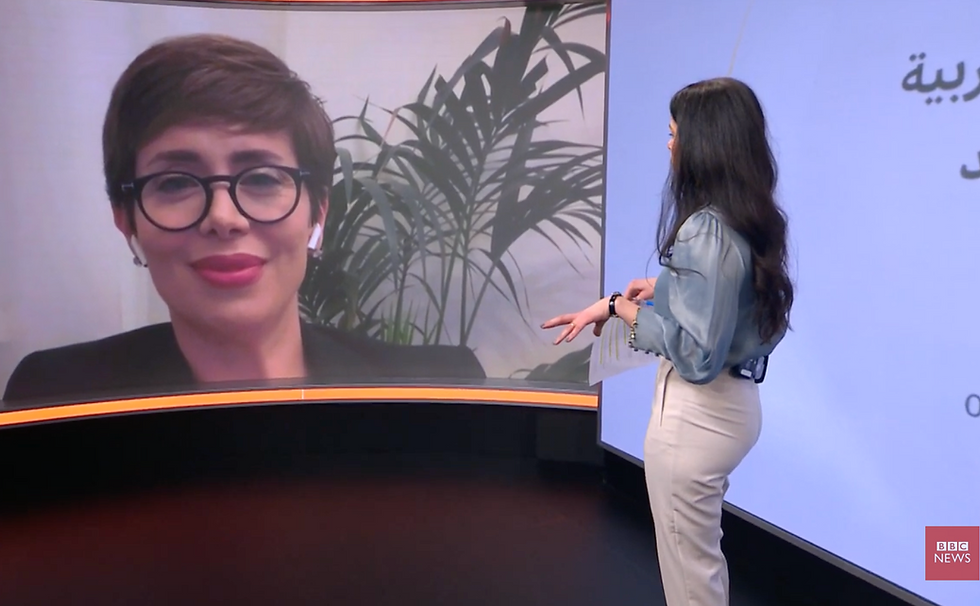
Sarah El Nabulsi, M.Sc., M.A., M.A., DHA Licensed Clinical Psychologist, joined the hosts of MBC1's Sabah Al Khair Ya Arab in the middle of the COVID-19 pandemic — a period during which millions of people had spent months at home, many discovering, perhaps for the first time, that they preferred it. The hosts presented a report on two competing orientations that had defined the cultural conversation: FOMO (Fear of Missing Out) and the newer, increasingly celebrated alternative — JOMO, the Joy of Missing Out.
The clinical perspective Sarah El Nabulsi offered was not what the hosts anticipated.

FOMO Is Not New — and It Was Never Just About Social Media
Fear of Missing Out — the persistent, anxious sense that others are having experiences you are excluded from, and that your life compares unfavourably to theirs — is widely discussed as a product of social media. The platforms did not create it. They amplified something that was already there.
Before Instagram and Twitter, the same phenomenon existed under a different name: keeping up with the Joneses. The same innate human drive — to remain relevant, to feel connected to what is happening around you, to not be left behind — was operating long before anyone had a smartphone. It is rooted in something genuinely human: our need for belonging and our sensitivity to social comparison. Social media did not invent this need. It gave it an algorithm.
The foundational research on FOMO was published by Przybylski and colleagues in Computers in Human Behavior(2013), establishing it as a pervasive apprehension that others might be having rewarding experiences from which one is absent — directly correlated with lower mood, lower life satisfaction, and a compulsive need to check and stay connected. What Przybylski's team documented was that FOMO is driven, at its core, not by social media use itself, but by unmet psychological needs — particularly the need for relatedness and for feeling that one's life is sufficiently full.
JOMO Is Not the Solution — It Is the Other Extreme
When the host suggested that JOMO — deliberately withdrawing from social events and social media, finding joy in being absent rather than anxious about it — sounds like a healthier alternative, my clinical response was to push back.
JOMO is not the antidote to FOMO. It is the same anxiety expressed in the opposite direction.
FOMO is driven by anxiety about social exclusion — it pushes a person compulsively toward participation, engagement, constant connectivity, at the cost of their own peace. JOMO, when it goes beyond simple healthy solitude, is driven by anxiety about social participation — it pulls a person away from engagement in order to control and avoid the discomfort that social situations produce. Both are anxiety responses. One runs toward. The other runs away. Neither represents genuine freedom.
In cognitive behavioural terms, avoidance is one of the primary mechanisms through which anxiety maintains itself over time. When we exit situations that produce discomfort — rather than learning to tolerate and move through them — we reinforce the belief that those situations are genuinely threatening, and our tolerance for them decreases. JOMO, as a pattern rather than an occasional preference, risks doing exactly this with social life: each withdrawal reinforces the belief that engagement is more than we can handle, and makes the next engagement feel harder, not easier.
Why Adolescents Are Particularly Vulnerable
Both FOMO and JOMO show up most intensely during adolescence, and for reasons that are developmental rather than generational. The adolescent brain is in the middle of a period of heightened social sensitivity — peer belonging is not a preference at this stage, it is a biological priority. Exclusion from the group registers, neurologically, with a severity that adults rarely experience in the same way. The social world is where identity is being constructed, tested, and revised, and the stakes feel correspondingly enormous.
This is why both patterns — the compulsive participation of FOMO and the strategic withdrawal of JOMO — appear most prominently in young people. It is also why the pandemic years were particularly psychologically significant for adolescents: the social environment in which this developmental work was supposed to happen was severely disrupted, and the consequences of that disruption are still being worked through.
When Does Either Become Pathological?
The threshold is consistent with how we assess the clinical significance of any pattern: when it causes genuine distress, and when it begins to interfere with a person's ability to function and pursue their goals.
Occasional FOMO — a passing awareness that you are missing something — is normal, and not cause for concern. Occasional JOMO — an evening at home, chosen with genuine contentment rather than driven by avoidance — is not only normal but genuinely restorative. The question to ask is: is this a choice, or is it a compulsion? Is staying home a preference, or is it a way of managing anxiety that has quietly narrowed the life you are living?
It is worth noting that the research base on JOMO specifically is still limited — this is a relatively recent cultural concept, and the clinical literature is still developing. What we can say with confidence is that it sits within the broader and well-established literature on avoidance, social anxiety, and the importance of behavioural engagement in maintaining wellbeing.
What Actually Helps: Presence
The capacity that sits at the opposite end of both FOMO and JOMO — and that addresses the anxiety driving both — is presence. The ability to be fully where you are: engaged when you are with others, genuinely at rest when you are alone, without the restless pull in either direction.
This is what is often described clinically as mindfulness: the quality of deliberate, non-judgmental attention to the present moment, without preoccupation with what you might be missing or what you might be avoiding. Jon Kabat-Zinn, whose foundational work on Mindfulness-Based Stress Reduction (MBSR) from the 1970s onwards built the clinical evidence base for mindfulness as a therapeutic tool, defined it as paying attention in a particular way — on purpose, in the present moment, non-judgmentally. Decades of research since then have consistently linked this capacity to improved mental health, lower anxiety, stronger relationships, and greater life satisfaction.
Presence does not mean constant engagement, and it does not mean deliberate withdrawal. It means being able to do either — genuinely — without anxiety driving the choice.
We need both things. We need full engagement with the people and experiences around us, and we need solitude that is genuinely restorative rather than anxiously self-protective. The work is learning to choose between them freely, rather than being pulled in one direction by fear.
About Sarah El Nabulsi
Sarah El Nabulsi, M.Sc., M.A., M.A. is a DHA Licensed Clinical Psychologist (License No. DHA-75083705) based in Dubai, and UAE Director of the Transcendental Meditation Organization. She has been featured on MBC, MBC1, Sky News Arabia, Dubai TV, and BBC Arabic, and is the founder of the online courses Anxiety 101 (Level 1) and Master Yourself (Level 2).
Related reading: Why Teenagers Are More Vulnerable to Social Media Than Adults
Citations :
Przybylski et al. (2013), Computers in Human Behavior — foundational FOMO research
Clark & Wells (1995) cognitive model — avoidance maintaining anxiety (framework cited contextually)
Jon Kabat-Zinn — MBSR and mindfulness definition
Comments