Arab Parents and Teenagers Are Living on Different Planets — A Dubai Psychologist on Bridging the Gap

Updated: Oct 15
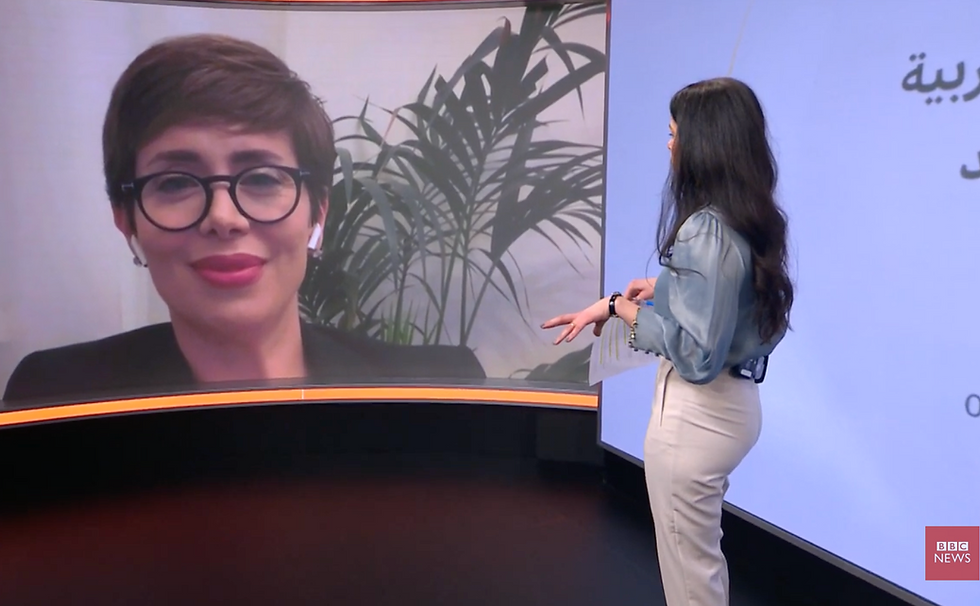
By Sarah El Nabulsi, M.Sc., M.A., M.A. | DHA Licensed Clinical Psychologist, DubaiOriginally discussed on MBC1 Sabah Al Khair Ya Arab, June 15, 2020

From my years of clinical work in Dubai, I've observed something that surprises many parents when I say it out loud: in much of the Arab world, parents and their teenagers are living on completely different planets.
This is not a criticism of Arab parents — quite the opposite. Arab parents are among the most deeply devoted I encounter in my practice. The love is real, the concern is genuine, and the intention is protective. But love alone does not close the gap between two very different realities.
Why the Gap Exists
Parents in our region are, understandably, operating from the world they grew up in — a set of values, social norms, and assumptions about what adolescence looks like that were formed decades ago. These frameworks lean conservative, rooted in community cohesion, collective honour, and a more predictable social landscape.
The world their teenagers are navigating today is fundamentally different.
The social dynamics, the peer pressure, the content teenagers are exposed to on social media, the relationships they form, the conversations they have — these bear little resemblance to what their parents experienced at the same age. Research consistently confirms this: the adolescent social environment has transformed more rapidly in the past two decades than in any comparable period in history, driven largely by digital technology and the collapse of traditional social barriers (Twenge et al., 2018; Rideout & Robb, 2019).
If you were to sit with your teenager's phone for a single afternoon and truly look at what they encounter daily — the content, the conversations, the pressures — many parents would be genuinely shocked. In my clinical experience, this is not an exaggeration.
What Teenagers Are Actually Facing
Adolescence has always been a period of significant psychological turbulence. The prefrontal cortex — the part of the brain responsible for impulse control, long-term thinking, emotional regulation, and the evaluation of consequences — is not fully developed until the mid-twenties (Steinberg, 2008; Blakemore & Choudhury, 2006). This means that even a confident, articulate, seemingly mature teenager is still neurologically in progress.
At the same time, today's teenagers are navigating a social world of extraordinary complexity: social media algorithms designed to maximise engagement, peer relationships that extend across borders and time zones, exposure to content that would have been inaccessible to previous generations, and the pressure to construct and maintain a public identity online from a very young age.
When the gap between the parent's world and the teenager's world is too wide, teenagers face these challenges alone. Not because they want to exclude their parents — but because they have learned, often through painful experience, that transparency leads to reactions they cannot manage: shock, anger, stricter rules, or loss of the limited privacy they have. So they go underground, and the very parent who loves them most becomes the last person they turn to.
Why This Matters — and Why Parents Are Still the Most Powerful Influence
Here is what I want every parent to hear: despite everything, you remain the most significant influence in your teenager's life. Research in developmental psychology consistently confirms that parental warmth, connection, and genuine engagement are among the strongest protective factors against adolescent risk-taking, mental health difficulties, and the influence of negative peers (Steinberg, 2001; Brown & Bakken, 2011).
The problem is not that teenagers don't want their parents' guidance. It is that the gap has grown so wide that they don't believe their parents' guidance applies to their actual reality. When a teenager feels that sharing what is truly happening in their life would result in incomprehension or punishment rather than understanding, they stop sharing.
And so parents lose precisely the influence they most want to have.
Bridging the Gap — What Parents Can Do
Bridging the gap between your world and your teenager's world does not mean abandoning your values or approving of everything your teenager does. It means developing enough understanding of their actual reality to engage with it meaningfully. It means creating conditions in which they genuinely want to come to you.
This is work I do with parents in the clinic, and it requires several shifts:
Curiosity over judgement. When you learn something about your teenager's world that surprises or disturbs you, the most productive first response is a question, not a reaction. Teenagers will only share if they believe sharing is safe.
Updating your assumptions. The social landscape of adolescence has changed profoundly. Parenting strategies that worked for previous generations require genuine updating — not because the values were wrong, but because the context has shifted.
Recognising that teenagers are not yet adults. This is something I explain to many parents who are surprised by it: your teenager is not yet a fully formed adult, even if they look and sometimes speak like one. Their brain is still developing. They need guidance precisely because they cannot yet fully foresee consequences — but that guidance lands very differently when delivered with understanding rather than control.
Building the bridge gradually. Teenagers do not become open with parents overnight. Trust is built through repeated experiences of being heard without being punished. Each conversation that ends with the teenager feeling understood — rather than judged — is a brick in the bridge.
The Larger Stakes
When parents succeed in bridging this gap, the benefits extend far beyond the teenage years. Adolescents who experience genuine connection and respectful engagement at home develop healthier relationships with authority, greater psychological resilience, and stronger capacities for self-regulation — precisely the qualities that will serve them throughout adulthood (Smetana, 2011; Dwairy & Achoui, 2006).
In my clinical work, I see the consequences of an unbridged gap regularly: young adults who do not know how to seek help, who have normalised disconnection as a relational pattern, or who carry the weight of years of unshared experience.
You are the most important person in your teenager's life. The gap is closable. But it requires genuine willingness to step into their world — not to approve of everything you find there, but to understand it well enough to guide them through it.
About the Author
Sarah El Nabulsi, M.Sc., M.A., M.A. is a DHA Licensed Clinical Psychologist based in Dubai and UAE Director of the Transcendental Meditation Organization. With over 15 years of experience supporting adults and couples across the UAE through anxiety, stress, burnout, and relationship challenges, she is a regular contributor to MBC, Sky News Arabia, Dubai TV, and BBC Arabic, and the creator of the Anxiety Reset online course series.
Working through the challenges of parenting a teenager?A one-to-one consultation with Sarah El Nabulsi offers structured, clinical support tailored to your family's specific situation.
References
Blakemore, S. J., & Choudhury, S. (2006). Development of the adolescent brain: Implications for executive function and social cognition. Journal of Child Psychology and Psychiatry, 47(3–4), 296–312. https://doi.org/10.1111/j.1469-7610.2006.01611.x
Brown, B. B., & Bakken, J. P. (2011). Parenting and peer relationships: Reinvigorating research on family–peer linkages in adolescence. Journal of Research on Adolescence, 21(1), 153–165. https://doi.org/10.1111/j.1532-7795.2010.00720.x
Dwairy, M., & Achoui, M. (2006). Introduction to three cross-regional research studies on parenting styles, individuation, and mental health in Arab societies. Journal of Cross-Cultural Psychology, 37(3), 221–229. https://doi.org/10.1177/0022022106286921
Rideout, V., & Robb, M. B. (2019). The Common Sense Census: Media use by tweens and teens. Common Sense Media.
Smetana, J. G. (2011). Adolescents, families, and social development: How teens construct their worlds. Wiley-Blackwell.
Steinberg, L. (2001). We know some things: Parent–adolescent relationships in retrospect and prospect. Journal of Research on Adolescence, 11(1), 1–19. https://doi.org/10.1111/1532-7795.00001
Steinberg, L. (2008). A social neuroscience perspective on adolescent risk-taking. Developmental Review, 28(1), 78–106. https://doi.org/10.1016/j.dr.2007.08.002
Twenge, J. M., Martin, G. N., & Spitzberg, B. H. (2019). Trends in U.S. adolescents' media use, 1976–2016: The rise of digital media, decline of TV, and the (near) demise of print. Psychology of Popular Media Culture, 8(4), 329–345. https://doi.org/10.1037/ppm0000203

Comments