Unveiling Mental Health in Dubai: A Conversation with Ms. Sarah El Nabulsi on Burnout, Social Media, and the Power of Meditation

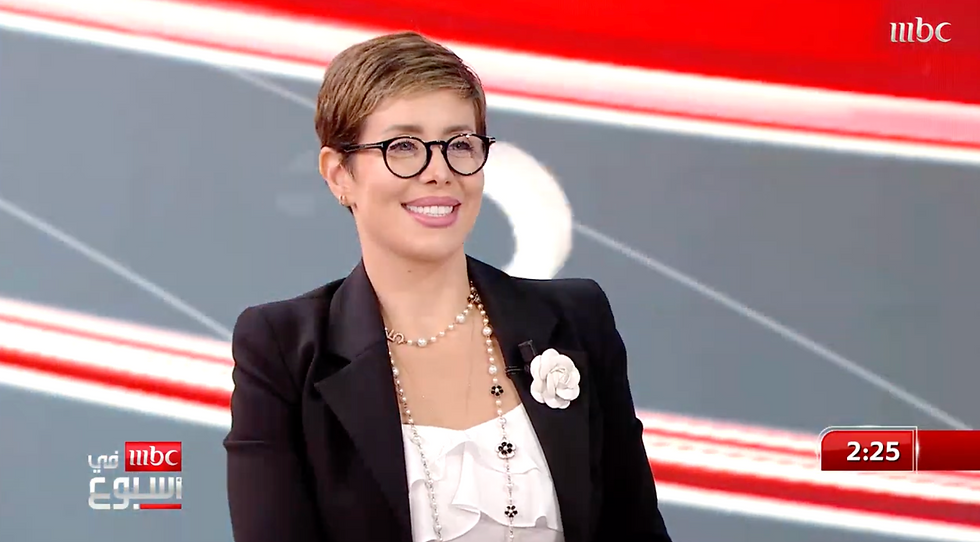
Ms. Sarah El Nabulsi, M.Sc., M.A., M.A., DHA Licensed Clinical Psychologist and UAE Director of the Transcendental Meditation Organization, joined the DubaiCatch Podcast for a candid, wide-ranging conversation on what it really means to protect your mental health in one of the world's most fast-paced cities.

Across nearly an hour, she covers burnout culture, social media limits, the loneliness epidemic hiding inside Dubai's 200 nationalities, the neuroscience of Transcendental Meditation, and what it takes to genuinely thrive — not just perform — in the UAE.
Dubai Is a Racetrack — And Most People Don't Slow Down
"When you live in Dubai, you have to remember that you're in the racetrack. It's hard to slow down because you see all the cars whizzing by — people going after their dreams, blowing up on social media, making sales, developing their wealth. You could see it and sit still, but most people will not."
Dubai's energy is intoxicating. It raises standards, reveals what's possible, and accelerates ambition in ways few places on earth can. But that same speed creates a unique psychological pressure that Ms. El Nabulsi encounters in her clinic almost every single day.
"This is something I encounter with 99% of my clients. Being in Dubai has many advantages — your career development can speed up dramatically, there are no obstacles, your ambition is unleashed. But the racetrack doesn't stop. And if you don't know how to step off it, the pace catches up with you."
From Interior Design to Clinical Psychology: A Career Built on Adversity
Ms. El Nabulsi's path to becoming one of Dubai's most recognised psychologists was not straightforward. She originally studied interior design before discovering a deeper calling — one shaped, in part, by having grown up during war in Lebanon.
"I had experiences that made me have to rely on myself and my inner life in order to face my challenges. Growing up in the war, facing a lot of difficulties — I kind of exercised this ability and skill of relying on myself. I trust myself, I trust my decisions, I trust my process of thinking. And so I knew I'd make it work."
That inner resilience — forged under real pressure, not theoretical — is the foundation of her therapeutic approach. She arrived in Dubai in 2008 and has built her practice here since.
The Social Media Threshold That Changes Everything
When it comes to social media use, Ms. El Nabulsi is direct: one to two hours is the limit.
"Once you hit more than two hours of social media use, that level of consumption correlates with higher rates of depression, anxiety, and other disorders."
The primary mechanism she identifies is loneliness. "As human beings we have a very strong need to connect with other human beings. But what's happening is that social media is replacing real connection with a simulation of it. We feel like we're reaching out, but we're not actually being seen or felt by anyone."
The algorithm compounds this — feeding you more of what keeps you scrolling, which deepens the addiction without deepening the connection.
Her advice: curate deliberately. "I don't have the comparison content, the luxury illusions, the highlight reels of other people's lives. That's a choice you can make."
Loneliness in a City of 200 Nationalities
One of the most striking observations in the conversation: In Dubai, despite being one of the most densely populated and culturally diverse cities on earth, if one is not careful one can experience intense loneliness; Ms. El Nabulsi sees in this frequently in her practice.
"I'd like to argue that if you live in a village, you would not be lonely at all — because you need other people. They make part of your day. Connection becomes essential when there isn't constant stimulation. Here in Dubai, there is so many wonederful things going on and so much stimulation — events, restaurants, experiences — that we can forget to build depth with the people around us."
Rates of anxiety and depression across the GCC are notably high, and the UAE is no exception. The very factors that make Dubai extraordinary — the pace, the ambition, the sheer volume of things to do and be — can make it a challenge to experience the slower, quieter connections that protect mental health if one is not proactive and self aware.
Why Self-Knowledge Is Urgent in the Age of AI
Ms. El Nabulsi sees the current moment in AI development as a critical inflection point for mental health — and not for the reasons usually discussed.
"We are at a time right now where AI is developing, and if you feel that you don't understand how your mind works, you are very vulnerable to being manipulated."
She gives a precise example: mention a product near your phone, and within days you're seeing targeted ads from multiple brands. "Mere exposure creates attachment. The more you see something, the more you start to prefer it. That's a natural cognitive mechanism — and it's being exploited."
Her prescription is not to resist technology, but to understand yourself deeply enough that external influence cannot override your own judgment. This is where meditation becomes not a wellness trend but a survival tool.
Transcendental Meditation: The Science Behind the Practice
Ms. El Nabulsi is UAE Director of the Transcendental Meditation Organization, and she is clear about why she recommends TM specifically above other forms of meditation.
"Transcendental Meditation has more than 600 studies done on it. It's been studied at Harvard, Yale, UCLA, and all the reputable research centres around the world. These studies are published in peer-reviewed journals. As a psychologist, that's the golden standard for me."
The mechanism is neurological: the mind is naturally wired to pay attention to external input. Meditation rewires it to direct attention inward.
"That inward focus means you begin to know yourself. You're able to self-reflect before making decisions. You become much more knowledgeable about how you want to navigate your life."
She also shares how she uses it personally. After hours of empathetic, fully present listening with clients — genuinely feeling what they feel — she returns home carrying their stress and pain.
"The first thing I want to do is my meditation. It helps me go beyond all of those stories, come back to myself, quiet myself, and feel fresh again."
"I'm Allergic to Suffering"
When asked what drives her, Ms. El Nabulsi answers without hesitation: she is allergic to suffering. She has been able to feel it in others since childhood, and has felt compelled her entire life to resolve it.
"Since I was a child I could feel other people's suffering. This is probably what drove me to taking on this career — because I need to resolve suffering in my space in order to feel good."
Her three final messages:
Invest in your faith. Whatever grounds you spiritually — make it a non-negotiable daily foundation.
Meditate. "Your brain is wired to pay attention to the outside. Wire it to pay attention to the inside so you can make decisions based on your own choices — not what you're being told."
Fill your life with love. "Start wherever you are. If you're on your own, get a pet, love that pet. Connect with other people. Love and feeling the emotions of love on a day-to-day basis heals your body, heals your mind. We are never made to be alone."
About Ms. Sarah El Nabulsi
Ms. Sarah El Nabulsi, M.Sc., M.A., M.A. is a DHA Licensed Clinical Psychologist (License No. DHA-75083705) based in Dubai, and UAE Director of the Transcendental Meditation Organization. She specialises in anxiety, burnout, trauma, and integrative biopsychosocial therapy.
She is the founder of Anxiety 101 (Level 1) and Master Yourself (Level 2) — online courses designed to be taken alongside therapy to accelerate the therapeutic process at a fraction of the cost of individual sessions.
Book a session → https://www.sarahelnabulsihealthawareness.com/therapyservices
Explore the courses → sarahelnabulsihealthawareness.com
Follow on Instagram → @sarahelnabulsi


Comments