Summer Depression: What It Is, How to Spot It, and What Actually Helps

Updated: 7 days ago
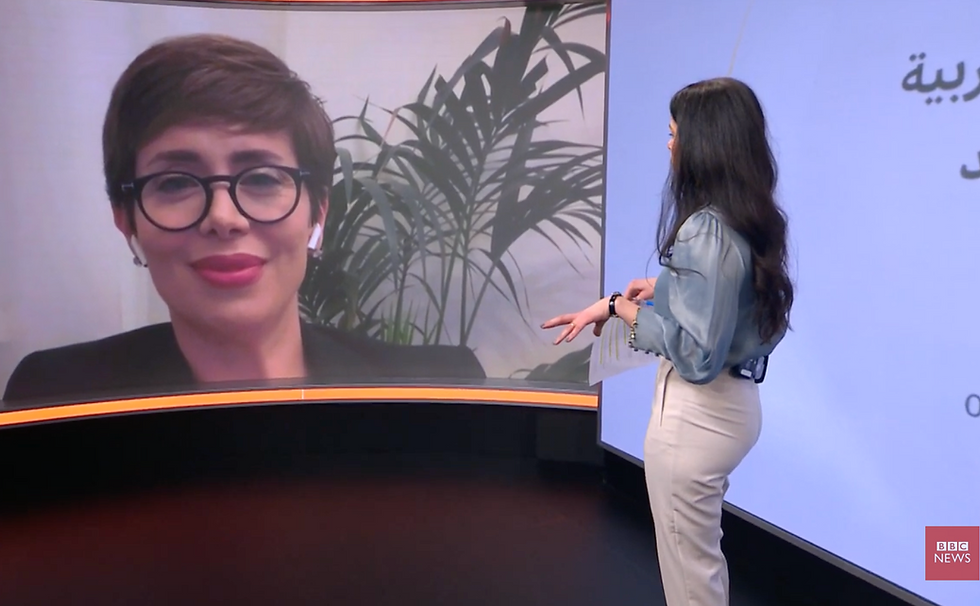
By Sarah El Nabulsi, M.Sc., M.A., M.A. | DHA Licensed Clinical Psychologist, DubaiOriginally aired on Sky News Arabia — Al Sabah 15 July 2026
Most people, when they hear the word "seasonal depression," picture grey skies, short days, and cold northern winters. Seasonal Affective Disorder, or SAD, is indeed most commonly associated with winter — and it has been extensively studied since Rosenthal and colleagues first described it formally in 1984.
What is far less discussed is its counterpart: summer depression. And for those of us living and working in the Gulf, it deserves far more attention than it currently receives.

What Is Summer Depression?
Summer depression is a subtype of major depressive disorder with a seasonal pattern — specifically, one that emerges or intensifies during the summer months. It is less common than winter SAD, but it is clinically real and well-documented in the research literature (Lam & Levitan, 2000; American Psychiatric Association, 2013).
Unlike winter depression, which is primarily triggered by reduced sunlight and disruption to circadian rhythms, summer depression appears to be driven by a different set of stressors: excessive heat, disrupted sleep patterns, changes in routine, and — particularly relevant in the Gulf — prolonged periods of social isolation as people retreat indoors to escape temperatures that can exceed 45°C for weeks at a time.
This is a critical distinction. Sunlight is not the trigger. The trigger is the cumulative physiological and psychological burden of heat, routine disruption, and reduced social engagement.
Exhaustion vs. Depression: Knowing the Difference
One of the most important things I discuss with patients is learning to distinguish between the ordinary exhaustion that summer heat produces and something more clinically significant.
The key diagnostic criterion that separates depression from tiredness is anhedonia — the loss of pleasure in activities that previously brought enjoyment. This is not simply feeling too tired to go out. This is finding that nothing feels worthwhile anymore. The things that used to bring satisfaction, connection, or joy simply no longer do.
Other distinguishing symptoms of summer depression — and here is where it differs importantly from winter depression — include loss of appetite and reduced sleep, rather than the increases in both that we typically see in winter SAD. Add to these: social withdrawal, persistent negative thinking, low energy, and a pervasive heaviness that does not lift.
If these symptoms persist for two weeks or more, that is clinically significant. That is enough to warrant a professional assessment.
I say this because I know how our culture responds to this threshold. In the Arab world, our tolerance for psychological pain is extraordinarily high. We have been raised to endure. Many of my patients have been living with depression for two years before they seek help — and even then, they are not entirely sure their suffering is "serious enough" to deserve it. It always is.
The Role of Body Type: Not Everyone Responds the Same Way
Something I bring into this conversation that goes beyond conventional psychiatry is the importance of understanding your own physiological makeup.
Not everyone responds to heat the same way. Some people have what I would describe — drawing on Ayurvedic principles that form part of the integrative framework I use in my practice — as a more "fiery" constitution. These individuals tend to be more reactive to heat: they may experience anger, irritability, emotional volatility, and heightened sensitivity when they are overheated or under-nourished. This can look like depression, but it is not quite the same presentation.
Others have a cooler, more stable constitution and are far less affected by temperature changes.
Understanding your own body type — and making lifestyle choices that work with rather than against it — is part of what it means to take a genuinely biopsychosocial approach to mental health. We address the biological, the psychological, and the social simultaneously, because they interact in all of us, all the time (Engel, 1977).
Summer in the GCC: Specific Risk Factors
For those of us living in the Gulf, summer a challenge that we need to be proactive with.
The heat is not merely uncomfortable — it is can be confining. Physical activity that we enjoyed in most of the year, was easy in cooler months becomes difficult. Children are out of school, disrupting the routines of parents. Sleep quality is impacted. Screen and social media use increases as people spend more time indoors.
Each of these changes alone is manageable. Together, they constitute a significant cumulative stressor — particularly for individuals who are already vulnerable to mood disruption.
This is not entirely unlike the Scandinavian situation, where prolonged darkness in winter creates its own health burden. Geography shapes mental health. The Gulf summer is our version of that burden — and it deserves the same serious attention.
Social Media and the Summer Comparison Trap
Summer is also peak comparison season on social media. Travel photographs, beach holidays, family gatherings, celebrations — the curated highlights of other people's summers flood our feeds at precisely the moment many of us feel most confined, most tired, and least like ourselves.
The human tendency toward social comparison is well-established and deeply ingrained — Festinger's (1954) social comparison theory identified it decades ago. Social media does not create this tendency; it supercharges it, providing an essentially unlimited supply of upward comparisons at every moment of the day.
When our internal resources are already depleted — when sleep is poor, routine has collapsed, and we feel physically drained by the heat — we are at our most vulnerable to the distortions that social media comparison produces.
The antidote is not willpower. It is self-awareness. And self-awareness is a skill that can be developed.
Panic, Anxiety, and the Energy Deficit
One question I am asked frequently is whether summer depression can trigger panic attacks. The answer is yes — and the mechanism is important to understand.
Depression, at its core, involves a profound depletion of internal resources. Energy, cognitive clarity, emotional resilience — all are diminished. When a person in this state faces a challenge or demand — even a routine one — they feel immediately that they do not have the resources to meet it. That gap between demand and perceived capacity is one of the most reliable triggers for panic (Barlow, 2002).
Summer depression does not cause panic attacks directly. But the exhaustion it creates dramatically lowers the threshold at which panic becomes likely. Treating the underlying depression is therefore essential for those who experience both.
What Actually Helps
The practical advice I give most consistently is this: develop self-awareness as a daily practice.
This is not about becoming emotionless or robotic. Therapy does not aim to flatten the human experience. What it aims to do is give you enough self-knowledge that you can detect shifts in your mood and energy early, understand what is driving them, and respond proactively rather than reactively.
Concretely, this means:
Daily stillness. The practice I recommend most consistently to my clients is Transcendental Meditation, practiced twice daily. With over 700 studies examining its effects, 100 of which are published in peer-reviewed journals, TM is one of the most thoroughly researched tools we have for strengthening the relationship between the self and its own inner states — for building exactly the kind of self-awareness and self-regulatory capacity that protects against burnout, depression, and anxiety (Travis & Shear, 2010; Nidich et al., 2009).
Movement at the right time. In the Gulf summer, this means early morning or late evening — the windows when outdoor activity is physically possible. Consistent movement is one of the most evidence-supported interventions for mood regulation available to us (Kvam et al., 2016).
Hydration and biological self-care. This sounds basic because it is. But when the body is chronically under-resourced — dehydrated, overheated, poorly rested — the psychological consequences are real.
Intentional social engagement. Social isolation is both a symptom and a cause of summer depression. Maintaining connection — even when it requires effort, even when it is done indoors — is not a luxury. It is a clinical priority.
If you recognise the signs I have described in yourself — persistent low mood, loss of pleasure, sleep and appetite changes, withdrawal — and they have lasted more than two weeks, please do not wait. Reach out to a mental health professional. You are not too sensitive. You are not overreacting. And you do not need to wait until it gets worse.
References
American Psychiatric Association. (2013). Diagnostic and statistical manual of mental disorders (5th ed.). American Psychiatric Publishing. https://doi.org/10.1176/appi.books.9780890425596
Barlow, D. H. (2002). Anxiety and its disorders: The nature and treatment of anxiety and panic (2nd ed.). Guilford Press.
Engel, G. L. (1977). The need for a new medical model: A challenge for biomedicine. Science, 196(4286), 129–136. https://doi.org/10.1126/science.847460
Festinger, L. (1954). A theory of social comparison processes. Human Relations, 7(2), 117–140. https://doi.org/10.1177/001872675400700202
Kvam, S., Kleppe, C. L., Nordhus, I. H., & Hovland, A. (2016). Exercise as a treatment for depression: A meta-analysis. Journal of Affective Disorders, 202, 67–86. https://doi.org/10.1016/j.jad.2016.03.063
Lam, R. W., & Levitan, R. D. (2000). Pathophysiology of seasonal affective disorder: A review. Journal of Psychiatry & Neuroscience, 25(5), 469–480.
Nidich, S. I., Rainforth, M. V., Haaga, D. A. F., Hagelin, J., Salerno, J. W., Travis, F., … Schneider, R. H. (2009). A randomized controlled trial on effects of the Transcendental Meditation program on blood pressure, psychological distress, and coping in young adults. American Journal of Hypertension, 22(12), 1326–1331. https://doi.org/10.1038/ajh.2009.184
Rosenthal, N. E., Sack, D. A., Gillin, J. C., Lewy, A. J., Goodwin, F. K., Davenport, Y., … Wehr, T. A. (1984). Seasonal affective disorder: A description of the syndrome and preliminary findings with light therapy. Archives of General Psychiatry, 41(1), 72–80. https://doi.org/10.1001/archpsyc.1984.01790120076010
Travis, F., & Shear, J. (2010). Focused attention, open monitoring and automatic self-transcending: Categories to organize meditations from Vedic, Buddhist and Chinese traditions. Consciousness and Cognition, 19(4), 1110–1118. https://doi.org/10.1016/j.concog.2010.01.007
About the Author
Sarah El Nabulsi, M.Sc., M.A., M.A. is a DHA Licensed Clinical Psychologist based in Dubai and UAE Director of the Transcendental Meditation Organization. With over 15 years of experience supporting adults and couples across the UAE through anxiety, stress, burnout, and relationship challenges, she is a regular contributor to MBC, Sky News Arabia, Dubai TV, and BBC Arabic, and the creator of the Anxiety Reset online course series.
Struggling with low mood, exhaustion, or loss of motivation this summer?A one-to-one consultation with Sarah El Nabulsi offers structured, evidence-based support tailored to you. Book a session →Explore the online courses →Follow on Instagram →
Related Posts


Comments